Jul 11

DOL New Overtime Regulations

DOL New Overtime Regulations

Stressed Business ManAre the DOL new overtime regulations stressing you out?

Relax, you have a few months to prepare.  The new regulations go into effect December 1, 2016.

You have probably heard that the new regulation significantly increases the minimum salary for employees that are classified as white collar and highly compensated, exempt from overtime pay.

These exemptions were originally created for highly-paid workers who had better benefits, job security and opportunities for advancement than those in hourly positions.

Since the 1970s there has been only one update to the minimum salary requirement which occurred in 2004 to its current amount of $450 per week, or $23,660 annually.

Effective December 1st, the minimum salary threshold increases to $913.00 per week, or $47,476 annually, more than a 100% increase.

These changes are sure to profoundly affect those in our industry. DHI has recently made available to its members a webinar put together by the Small Business Legistlative Council to help navigate through these changes. Click on the pic below to access this webinar.

image

If you are not a member of DHI a simple google search will result in multiple sites offering advice on how to navigate the DOL new overtime regulations. The best that I have found is from Paychex, they have put together a comprehensive paper on dealing with the changes.  Check out “Section IV Making A Plan” to alleviate some of that stress!

Overtime-Regulations-Guide-2016-by-Paychex-1

Comment below with your experiences dealing with these new regulations, I’m sure others would be interested in hearing how your business is coping.

Jul 05

How Long Is It Going To Last

How Long Is It Going To Last?

ArrowBid requests are rolling in, contracts are being signed and backlog is finally notable. The year started with good predictions and hasn’t disappointed.

Dodge Data & Analytics’ 2016 Construction Outlook report predicted 6% growth, with the value of construction starts reaching an estimated $712 billion.

Distributors are busy, most are confident enough to hang out the help wanted sign. A few are holding off retirement plan one customer said to me. Another is willing to “ride out this wave” before putting up his board. Definitely a refreshing change from conversations of recent years past.

It is evident though, that the scars from those lean years are still visible. As conversations about the current good conditions slow they immediately shift to ones of concern. Everyone is asking the same question, “How long is it going to last?”

Predictions and theories are many. Most distributors fear that we will be repeating the whole nightmare again, and soon.

Let’s face it, there are some valid reasons for these concerns. The upcoming presidential election, the effect foreign events like Brexit have on the global economy and the sharp increase in steel prices name just a few.

Advice? Expect the best, prepare for the worst. “They”, the all knowing experts, say to take full advantage of the many opportunities available, reduce debt and of course, store some cash.

The fact that we are all discussing these concerns while at the same time enjoying the feast can only mean that we will be better prepared if and when we face challenging times again.

I wish you all much success, we are in this together!

May 12

The Door Switch An Anti-Ligature Device

tds (1)The Door Switch An Anti-Ligature Device

The door switch is an over the door sensor that helps in alerting behavioral healthcare staff when an inpatient attempts self harm.  A top of the door safety alarm that notifies attending nurses when there is an inpatient hanging suicide attempt.  Due to the rising trend of inpatient suicide, behavioral health facilities are being urged to protect their doors.

The following information was shared in the April issue of The Official Newsletter of The Door Switch to assist you in the process of equipping your facility with The Door Switch.

Be sure to follow this link to The Door Switch website for additional information.

If you are interested in a Door Switch system for your facility but do not know how to begin the process, the first step is to call us at The Door Switch and describe your requirements. We are very proud of our system and look forward to answering your questions and offering information about it. We will email you a quantity of electronic documents that we provide to persons interested in our product. Those documents include our complete product book, architectural specifications, and a summary of the features of our system that set it apart from our competition. If after learning about The Door Switch, you believe that our system might be a solution to ligature risks at your facility, we will discuss with you in an in-person visit to your facility through which we can demonstrate our system and fully explain its features.

In determining which of your facility’s doors should receive Door Switch coverage, we recommend that you consider covering doors to which patients have unsupervised access. For most facilities, such doors consist of patient room and bathroom doors. In hospitals where patients undergo long-term treatment and may have unsupervised access to day rooms and laundry facilities, such doors should also be considered for coverage. Through a process of identifying specific requirements for your facility, we will assist you in determining which doors require coverage.

We are the manufacturer and seller of Door Switches. As such, we do not install systems. Installations are typically performed through the coordinated efforts of door hardware installers and security integrators. A door hardware company normally installs Door Switch materials on covered doors. Security integrators install electronic components and program the system’s control panel. However, for some installations, security integrators perform all aspects of the installation process. They occasionally perform this dual role because many security integrators with broad experience in access control possess the tools and skills required to install Door Switch door hardware.

If you determine that you would like an estimate for a Door Switch system for your facility, we will work with you to determine how involved you wish to be in the process of identifying and selecting installers. Some facility administrators prefer to use installers who regularly perform work at their hospitals. Others prefer to be more “hands-off” and opt for complete turnkey projects. In those instances, we can identify and fully vet for you any and all required material installers.

Once we have identified and/or agreed upon an installer or installers for your project, we will provide a quote for your project’s materials to a distributor. In most cases, that distributor will be an installer on your project. However, there are other projects in which one of our national distributor partners will be called upon to step in and conduct the transaction. If you choose to purchase a system, you will contract for the materials and installations with the appropriate parties, and we will initiate the manufacturing and purchasing of your materials.

The materials that make up a Door Switch system include Door Switches; continuous hinges or door pivots, strobes, key switches, audible alarms, and a supporting system of HoneywellTM and AltronixTM electronic components. Components by both of those manufacturers are considered to be the standards in their industry. The security integrator will provide additional, ancillary materials including electrical boxes, appropriate low-voltage wiring, and lock cylinders and cores for the key switches.

The key point that we wish to make through the explanation of this process is that designing and purchasing a Door Switch system need not be a task approached with trepidation. We will work to simplify the process for you and perform as many (or as few) of the required tasks as you prefer.

Please look for Part 2 of this article in the May edition of The Official Newsletter of The Door Switch. In the second part of the article, we will describe the processes of material delivery, installation, and system programming.

Jan 19

Tools of the Trade PL2 Frame Set

Tools of the Trade PL2 Frame Set

imageMany of the tools that you will read about on this blog I haven’t actually seen used in the field.  The PL2 Frame Set is an exception.   I have seen this tool in action during a job site walk-through scheduled to discover who to blame, the reason for locks not functioning properly.

As you can imagine the manufacturer of each component of the opening wanted to be present during the walk through. Each had a significant financial stake in the outcome as the project was a large multi floor dormitory at UGA.

I was there as a representative for Mesker, the hollow metal frame manufacturer along with Buddy Wilson, an inside team member from the Mesker Huntsville plant. Also in attendance were representatives for the wood door and hardware manufacturers as well as the installer, the contractor and UGA.  We were all ready to defend our products and position.

Without going into detail I can share that the PL2 Frame Set that Buddy brought along quickly determined that the problem did not lie with the fabrication or the installation of the hollow metal frames. We were able to continue the walk through confident of our position.

The PL2 Frame Set is definitely a tool worth checking into.  Click on the picture below to check out their website.

imageThe intuitive design of the PL2 Frame Set allows anyone on the work site to check and make precise alighments.

  • Door frames are aligned the first time, everytime.
  • No guesswork. No calculations. No mistakes.
  • It’s quick. It’s uncomplicated. It’s accurate.
  • Can be used in both commercial and residential applications.
  • Comes in its own carrying case.

The PL2 Frame Set is Long Lasting & Durable. Made of study commercial grade aluminum it is made to withstand the demands of a job site. It won’t bend, break or become unaligned during normal use.

Next week’s Tool of the Trade: The Door Gap Gauge

Sep 14

Who’s Going To Fill Their Shoes

This post was published in the 2015 September issue of Doors & Hardware Magazine.

ShoeWho’s Going To Fill Their Shoes

Over the last 18 months as the construction market has been making a comeback many of the distributors in my territory, located in the southeast, are expressing a common concern. What has them troubled is the lack of experienced, qualified employees to fill the shoes of retiring veterans.

Door and hardware veterans are our experts. They have acquired decades of hands-on experience. After a few years spent in the trenches that knowledge becomes invaluable. The complexity of our industry, combined with its niche nature, has fostered long, rich employment histories.

The good side of that is feeling pretty confident that you will always have a job. Speaking from personal experience I remember several years ago planning a move to a new town. I did not worry about being able to find work. I simply talked to one of my manufacturer’s representatives and asked about the distributors in the town to which I was moving. I lined up three interviews in one day and had a job before the sun set.

The downside? Well, we have all joked that “once you’re in the door and hardware industry you can’t get out”! The knowledge you gain has a price tag attached, to both you and your employer. Employers don’t want you to go anywhere after they have invested time and resources in your training. You don’t want to make a move to another industry and have to start from scratch.

Retaining employees for decades left no reason to bring in new blood as the years went by. That, in combination with the effect the economic downturn had on the ability to fill positions left by retiring veterans, has left distributors with a serious gap of experienced employees. Some employers shared that in the recent past it was a relief to have an employee retire as opposed to having to lay them off. Now, however is a different story. With the rebounding construction market there are finally positions to fill. The problem is there is no one to fill them.

The 2012 U.S. Census Bureau’s Current Population Survey reports approximately 44 percent of the construction workforce is 45 or older, one in five is 55 or older.

Wanting to compare the above general statistics with those specific to our industry, I polled 10 distributors throughout my Florida and Georgia territory. These distributors ranged in size from 5 to 25 employees. I compiled the numbers they were generous enough to share and discovered that our industry faces a slightly tougher position than the overall construction workforce. 54% of the employees polled are over 45 years of age with two out of every five of those being over 55.

In a recent conversation with Jeff Hewett, Vice President of Quality Hardware in Jacksonville, he agreed there is a need to address this concern in current strategic plans. Out of his estimating/sales force of 5 employees, there is a probability that 2 will retire in less than five years and 2 more in less than 10.

Jeff is a third generation owner who started as a delivery driver for his family business in 1996.   If he thought that leaving to serve our country for 7 years would gain him any advancement when returning, he was mistaken. Back to delivery driver he went as he worked his way up through the ranks. This training has served him well as he positions himself at the helm to ensure that Quality Hardware thrives in upcoming decades.

Our industry is filled with stories like Jeff’s, spending years learning the trade and working up to new positions. A sales person that has worked in the shop sees a project from more than one perspective and is less likely to omit important details. This is how our veterans come to be, a continual work in progress!

In anticipation of the positions that will be left by his retiring veterans, Jeff is developing a training packet for new hires. He is hoping to shave some valuable miles off the long learning curve by having an efficient training program. He is including a list of “things I wish I’d known” based on his own learning experiences.   This proactive approach should serve him and Quality Hardware well.

Office personnel are not the only positions included in this concern. I hear frequent stories about how difficult it is to find reliable shop and labor employees. It appears to be an impossible task to keep anyone long term, much less an experienced candidate. I have repeatedly heard complaints like, “young guys just don’t want to work” and “this new generation is just not willing to put in the time”. Turn over seems to be a major problem.

Jim Sabella, VP of Cajun Installation, Inc. says he has been successful with building a loyal labor force. “I am willing to overlook past mistakes discovered during the application process and give someone a second chance”. He went on to explain that giving someone a second chance when others won’t builds respect and loyalty pretty quickly.   “I take care of my team” Jim stated earnestly.

After my many discussions and statistic gathering, I believe it is clear that this is a valid and serious concern that should be on the industry’s radar. Our veterans are an invaluable resource and vital part of our organizations. They will leave big shoes to fill.


Aug 24

Proper Jobsite Storage of Hollow Metal Doors and Frames

rusty-metal-texture-redThe 2015 summer season has been wrought with torrential downpours in the southeast.  The first two weeks of August saw an accumulation of nearly 6″ of rain over parts of Florida.

With all of that moisture it’s important that your superintendents are aware of the proper jobsite storage of hollow metal doors and frames.

See below paragraph 4.1 regarding proper jobsite storage procedures, from The Steel Door Institute’s A250.8-2014 “Specifications for Standards for Steel Doors and Frames”.

All doors and frames shall be stored vertically under cover. The units shall be placed on at least 4” (102mm) high wood sills or in a manner that will prevent rust or damage. The use of non-vented plastic or canvas shelters that can create a humidity chamber shall be avoided. A ¼” (6.3mm) space between the doors shall be provided to promote air circulations. If the wrapper on the door becomes wet, it must be removed immediately. Proper jobsite storage is extremely important in maintaining the quality and integrity of the factory applied paint. IMPROPER STORAGE of material WILL HAVE an adverse effect on the factory applied paint’s ability to meet the requirements of ANSI/SDJ A250.10, “Test Procedure and Acceptance Criteria for Price Painted Steel Surfaces for Steel Doors and Frames” or ANDI/SDJ 250.3, “Test Procedure and Acceptance Criteria for Factory Applied Finish Painted Steel Surfaces for Steel Doors.”

It may be a good idea to include this paragraph in your submittal package as well as note it on order acknowledgements and invoices.  Going the extra mile to inform your customer of these procedures will pay off by helping the project run smoothly.

In the event that these procedures are not followed and rust appears on material, it should not be painted over. The proper course of action is to sand the material down to bare metal and re-prime.  Only then should the frames be painted per the manufacturer’s recommendations. It should be duly noted that painting over rust only hides the problem temporarily and creates a more serious future problem.

May 04

Be a First Responder!

Fireman2Are you a First Responder?

I am currently listening to the audio version of “Do Over” by Jon Acuff.

He mentions the importance of being a “First Responder”. He uses the term first responder to reference answering phone calls and emails the first time someone attempts to reach you. It should be your goal to eliminate the need for second attempts!

In our industry this can be difficult because contractors get antsy when they can’t reach you. They will try over and over again in a short amount of time, usually becoming more agitated with each attempt.

The good news is this is controllable!   During my years of working for distributors, I have noticed the different habits of many sales persons and project managers that have an effect on this call back rate.

It seems some are consistently informing the receptionist that they are “off calls” because they are working on an estimate or in the middle of detailing a project. Although these are legitimate reasons to restrict interruptions, they are often exaggerated and abused. These same employees are notorious for not promptly returning calls once they have completed their task because they figure the customer will call back. This approach is done with such frequency the contractor has no faith in getting a returned call. This makes for MORE attempts.

If you are guilty of the above you might feel overwhelmed and frustrated. Your day may feel totally out of your control and you are constantly putting out fires. Try following these easy tips.

  • When notifying the receptionist to hold your calls, ask her to inform callers of the estimated time you will be able to make return calls. This can also be done on a direct line with a voice message.
  • After the task you are working on is complete, return all calls promptly. If you are unable to resolve their issue immediately it is still important to call them back and let them know you are working on their issue. Give your customer an estimated time frame that you will call them back with a resolution.
  • Respect this time frame. If you were unable to solve their issue within the estimated time, call them back and let them know you need a little more time. Give them details on what you are waiting on and how much longer you need.

Over time these habits will foster a comfort level with your callers that all they need to do is call you once and they will be taken care of as quickly as possible.

 Make the commitment today to Be A FIRST RESPONDER!

Apr 24

The Role of a Manufacturer Product Representative

SalesmanExtraordinaireI ran across this great article on the Long Island CSI chapter website regarding the role of a manufacturer product representative.

The author, Ralph Liebing, RA, CSI, CDT, of Cincinnati, OH pays a nice tribute to those in my field.  I was pulled into the article when I read “we professionals need to take some time to speak of “those other folks”– the manufacturers’ and product representatives!”

Sometimes it seems us reps have a bad rap and are considered “those other folks”.  I will always remember a conversation I had with a DHI chapter member about revamping our local chapter before it dies out.  His response to me was that we would never be able to revamp the chapter as long as reps held the board positions.

That was the first time I experienced the “us” and “them” separation and can tell you my ego was a little bruised.  Having 21 years in the industry, with 17 of them being on the distribution side, I always felt like we were all in this together. I assure you that during the last five years as a rep my ego has toughened up significantly!

I love the industry and love what I do, so I was happy to read Ralph acknowledge things like “The product rep therefore, is looked upon not as a salesperson, but as a technical resource with depth of product knowledge far greater than the design professional.”

This industry, as much if not more than others, is very technical, complicated and ever changing.  Having a knowledgeable source to turn to with questions is invaluable.  I am always eager to learn things about the products I represent and share that knowledge to all those involved in the building process. I hope your product rep offers that to you.

Ralph did list several objectives that will enhance our relationship with design professionals, specification writers and our distributors.  I list them below, but urge you to click the link and enjoy the full article.

Be honest; even if your news or message is bad or adverse.

Be timely; respond when requested; try to make periodic calls for updates.

Don’t diss the competition; I want to know only about your product and what you can do!

Be helpful, if you can, by giving only what is asked and alternates that seem reasonable– don’t try to sell me everything.

Don’t know?– Please say so and find out—quickly!

Don’t ooze, be professional in all things from appearance to information offered.

Don’t placate or pander, state your case and understanding.

Don’t expect miracles from me– I must be a dispassionate professional in fairness to all.

Don’t send me “dumb” gifts to motivate or reward me–

Just appreciate my position and what WE need to accomplish TOGETHER!!!!

Do you have any more suggestions that may help strengthen our relationship?  I’d love to hear them in the comment section below!

Thank you Ralph for your tribute to product representatives!

Feb 19

Hampton Inn’s Forever Young Initiative

For those that are just discovering the barn doors requirements for Hampton Inn’s Forever Young Initiative, here is a little information that may help you.

For hoteliers planning to build new Hampton Inns or spiff up their existing franchised properties, Hilton’s corporate leaders have launched an improvement campaign aimed at keeping the ubiquitous brand fresh for investors as well as guests.

Called the Forever Young Initiative, the 127-point refresh will benefit guests as the redesign of the hotel’s exterior, lobby and guests rooms will smack of modern influence. New amenities are geared to accommodate today’s leisure and business guests who travel a lot differently than they did even just five years ago.

One item on the 127 point initiative calls for the use of a sliding barn door to be used at the bathroom or shared between the bathroom and closet. It is actually a very clever design, saving space and using one door for two openings.

2510.01F

Barn Doors

1. A solid ‐ core, single panel, wood barn door must be at the bath or shared between the bath and closet where shown in the prototype drawings. Existing properties must refer to the FF&E Specifications ‐ contact Hilton Worldwide for room types not included.

2. Barn Door hardware must comply with the following:

a.Exposed system

b.Brushed Stainless finish

c.Concealed or decorative fasteners

d.Top mount door hangers

e.Adjustable bumper stops

f. Locking Hardware is not required.

3.If the door faces the guestroom entry, a mirror must be in set in to the panel on the entry side of the door.

The superior quality of Supa MDF Stile & Rail Doors make them a perfect choice for both full service and select service projects. The Hampton Inn’s “Forever Young Initiative” is an example of a perfect fit for Supa.

Approved with Hilton’s Suppliers Connection program, Supa Doors has custom tailored a quick, flexible, and ultra affordable Hampton Inn Forever Young Barn Door package.

IMG_3547 IMG_3544

If you are bidding on a Hampton Inn be sure to give me a call. I’d be happy to assist you with Supa Doors and the Forever Young Initiative.

Nov 18

What Is A Swing Clear Hinge?

What is a swing clear hinge?

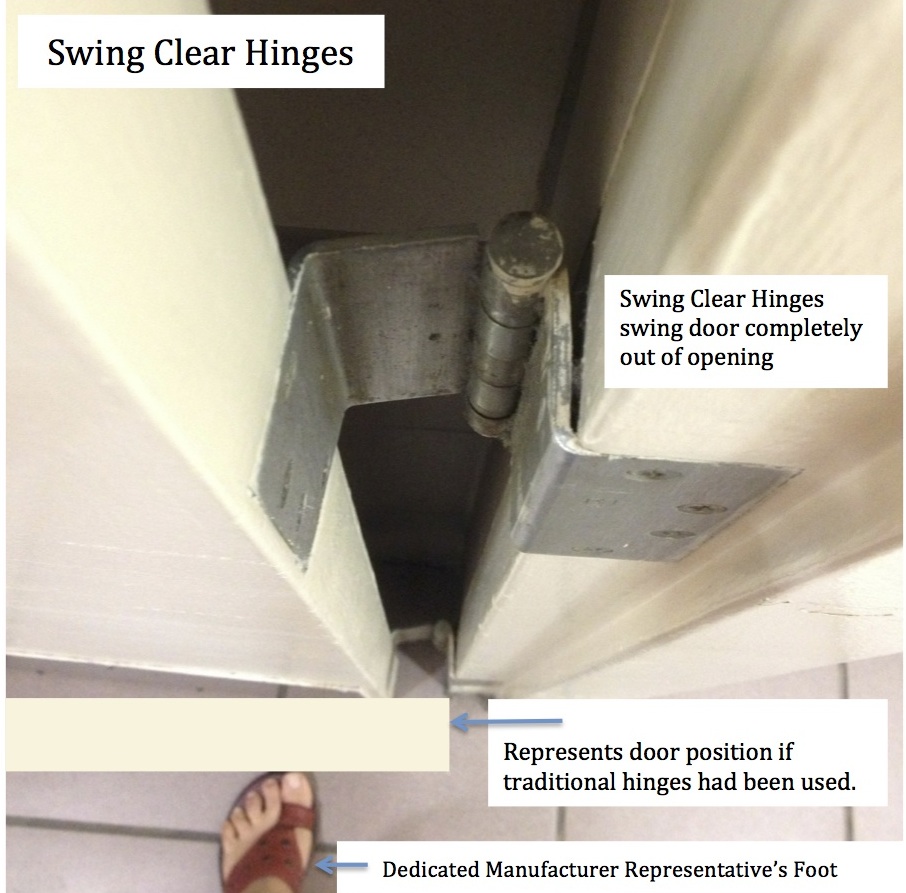
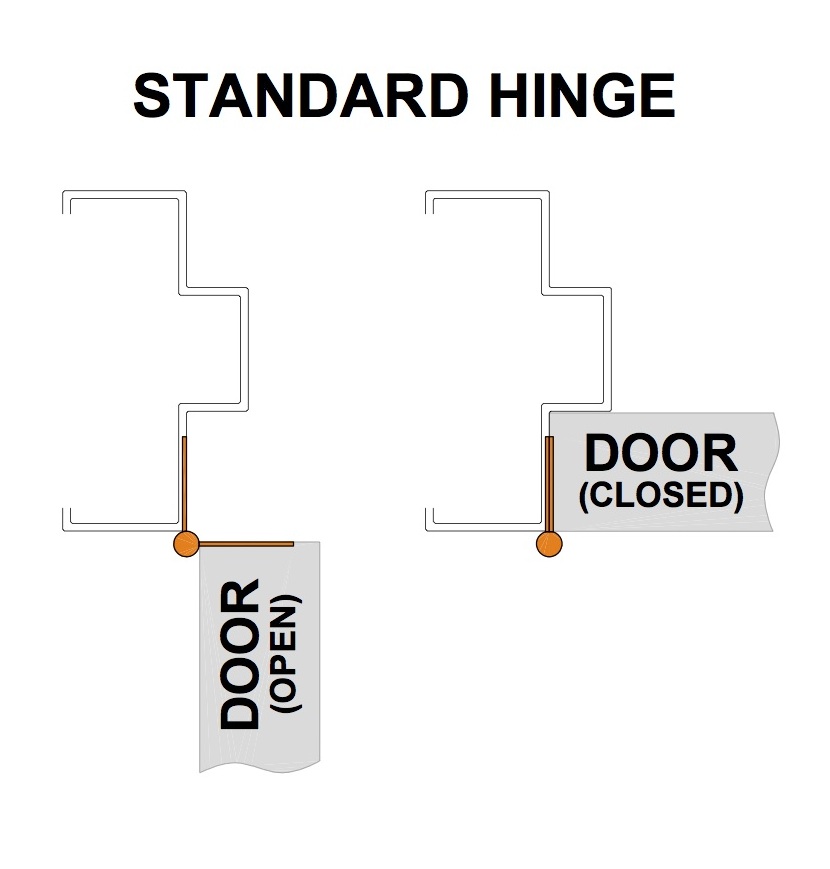
Swing clear hinges are special hinges that swing a door completely out of the opening. This allows for maximum clear width of the opening.

Swing Clear HInges1A popular application for swing clear hinges is hospital corridors. Having the door tucked out of the opening reduces damage to the door edge by stretchers and carts. Swing clear hinges can protect more than the door edge.  Think of protecting the knuckles of wheel chair patients, a concern of many nursing homes and assisted living facilities.

You can also use swing clear hinges if you need the full width of the door way to move large equipment or to achieve the required 32″ minimum clear width for ADA compliance.

They are non-handed and come in different sizes and finishes. They are made for both square edge or beveled edge doors, be sure to select the one appropriate for your project. Swing clear continuous hinges are also available.

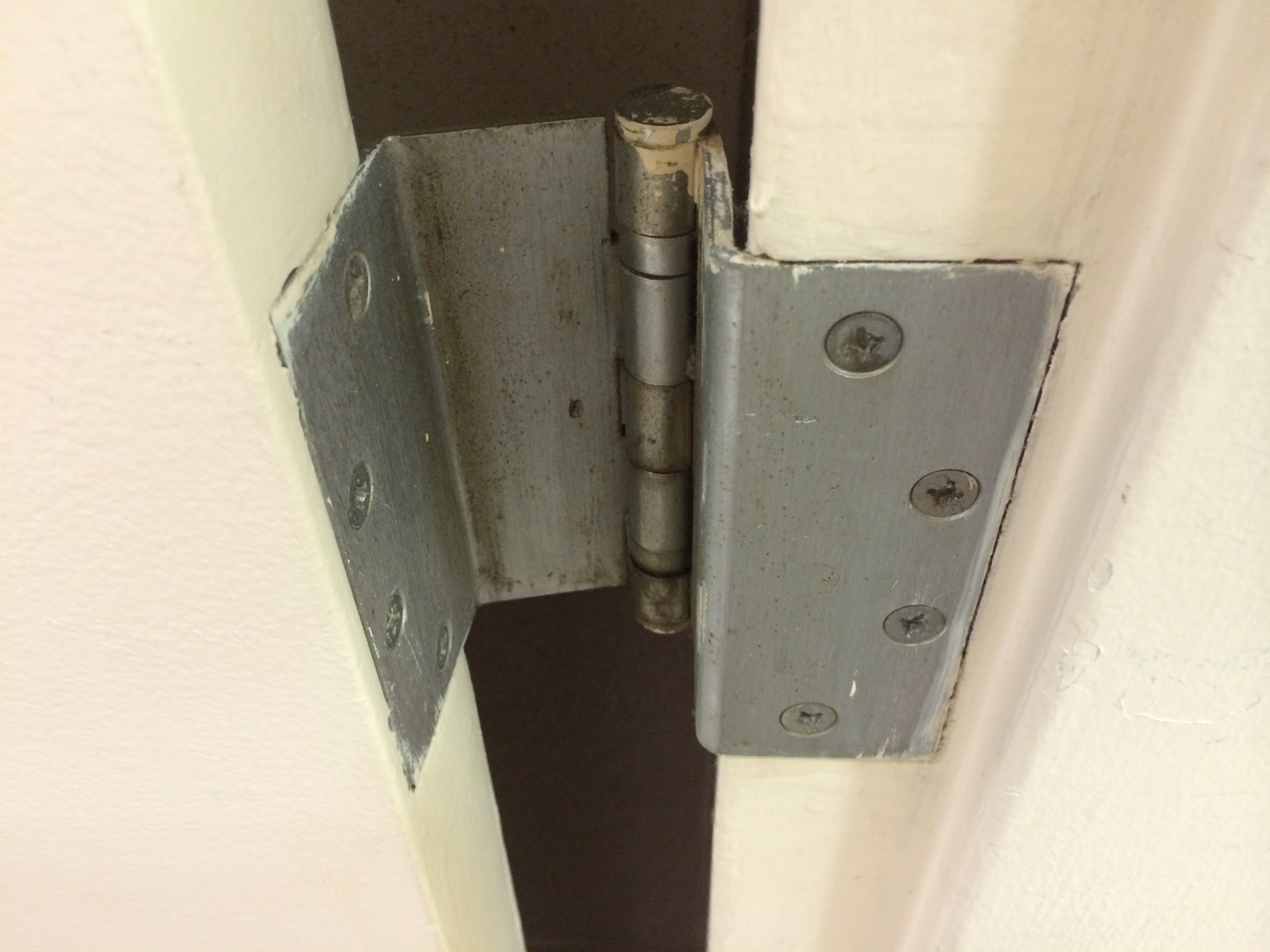
The door needs to be open approximately 95 degrees to get the door totally out of the opening.  You will see in the large picture below that a recessed pocket was built in the wall for the door to sit flush with the wall when opened.

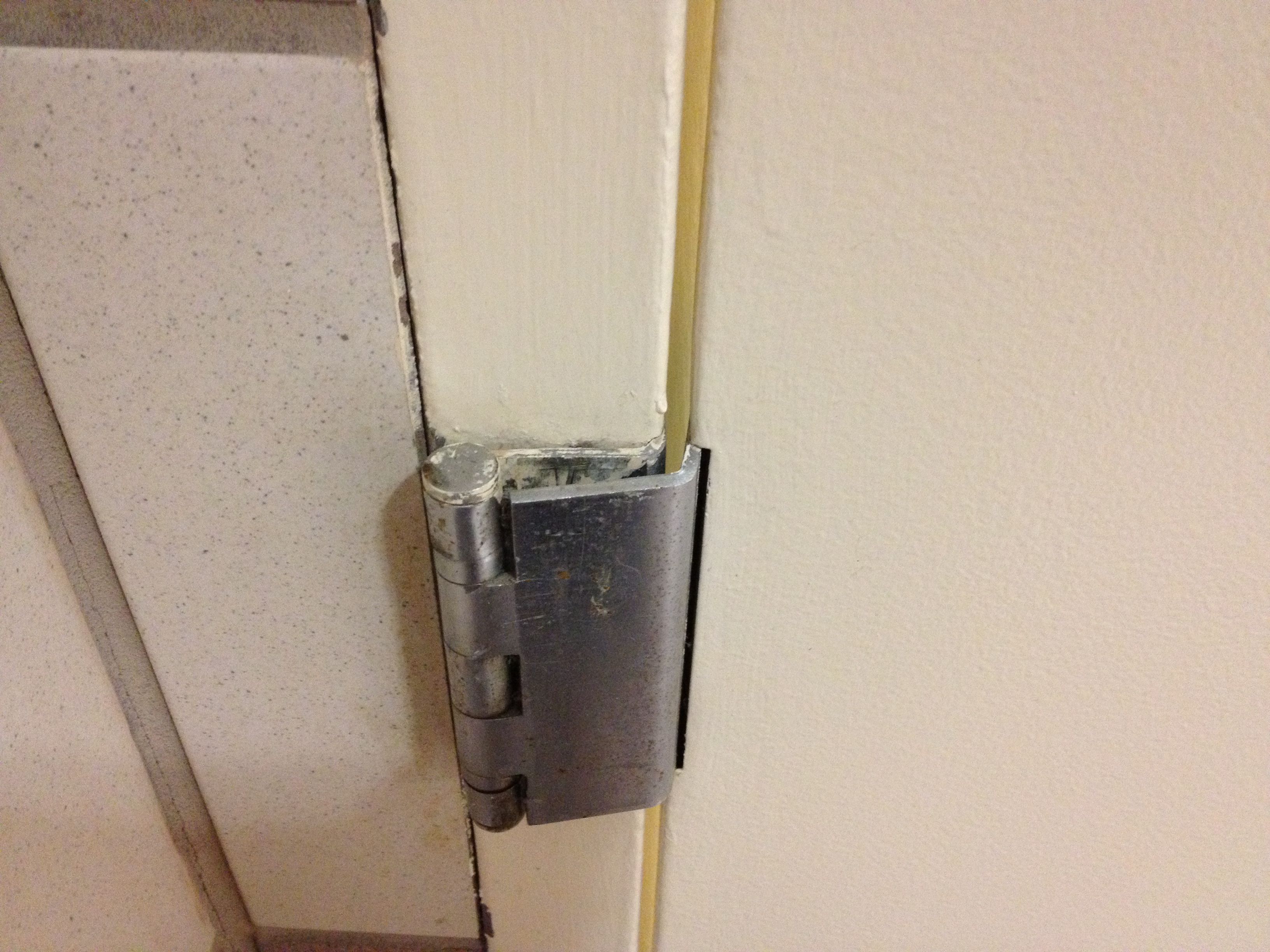
The hinge itself is an “L” shape when in the closed position and can be a little less than aesthetically pleasing. In the case of busy hospital corridor doors that are typically “held open”, this is not a concern.

standard hinge detail-Model  swing clear hinge detail-Model

IMG_2798 IMG_1192

IMG_1189

Nov 17

Know Your Bid-Hit Ratio

imageThings are definitely heating up through out my territory. Many of my distributors have more RFQs than they can handle, having to turn some down. It’s a refreshing problem to have to say the least! There is even talk of margins increasing ever so infinitesimally.

With the state of the economy still in question it is very important to make sure you are making the right choices as to which projects to bid and which ones to pass on.

I know right, duh.   I know that it sounds like a no-brainer but I also know that when we get busy we have the tendency to be reactionary in lieu of proactionary being proactive.

One of the ways to make sure you are selecting the right projects is to be intimately familiar with your bid-hit ratio.

Another no-brainer right? But I am willing to bet the majority of you that are reading this do NOT know your bid-hit ratio. I know this because I know human nature.   Knowing your bid-hit ratio is truly a proactive measure and we are too busy to be proactive! I can also share that in my 17 years of working on the distribution level, this statistic was never stressed.

I am assuming that everyone knows what the term bid-hit ratio means. For those of you that may not, it is the relation of the total amount of bids submitted to the total number of bids you successfully won. For example, if your bid-hit ratio is 4:1 it means that you secure one out of every four projects quoted.

The benefits to knowing your bid-hit ratio are many. For one, as the saying goes, you can’t improve what you don’t measure.  Your bid-hit ratio is a measure of your successful bidding process. Studying this analysis can reveal what type of projects your sales force should focus on and ultimately improve your odds

You should be asking the following questions about the projects you have been awarded.

  • Project Type – Is there a certain project type that you were successful on more than others? Public or public? Hotel or Hospital?
  • Project Size – Do you have a higher success rate with small, medium or large projects?
  • Specific Product or Manufacturer – Did the winning projects have a common product or manufacturer?
  • Same Contractors – Was there a high occurrence of winning bids with the same contractor?
  • Estimator – Do you have a specific estimator that is more successful?

You can also reverse it and ask the same questions about the projects you have lost to learn which ones are a waste of your valuable time. Time is your most precious commodity. When it gets busy you want to make sure you are operating as efficiently as possible. Knowing the answers to the above questions will help you narrow down that stack of RFQs on your desk and make sure you are focusing on opportunities that will bring you the most success.

It will also help to know how your company measures to national averages.

George-HeadleyI found the following information on George Hedley’s website. George Hedley is owner of Hedley Construction and Development, Inc. He shares his business expertise and leadership style through his writing, speaking and coaching services.

Click on his pic on the left to go to his article on the importance of knowing your bid-hit ratio.

See how you compare to the averages observed around the country.

General Contractors                  Bid-Hit Ratio
– Public Works         6 : 1   to   10 : 1
– Private Bid Work   4 : 1   to     6 : 1
– Negotiated Work   2 : 1   to     4 : 1

Subcontractors                         Bid-Hit Ratio
– Public Works         7 : 1   to   11 : 1
– Private Bid Work   4 : 1   to     6 : 1
– Negotiated Work   3 : 1   to     4 : 1

Here are links to some great articles I found expressing how important it is to know your bid-hit ratio.

Construction Accounting Article – bid-hit ratios are The Secret to your success
Improve Your Bid-Hit Ratio: Top 5 Essentials of a Winning Bid Strategy
Import Your Bid-Hit Ratio: Try These Strategies to Save Time

You are NOT too busy to be proactive, kick it in gear!  Have a great week!

Nov 06

Supa Doors and the Forever Young Initiative

I’m sure you are aware of the steady increase in hospitality projects over the last 18 months. It is a huge improvement over the last few years when there was little to no activity in this sector.

Between Mesker Door, Design Hardware and Supa Doors I am quoting at least 2 projects per week. I have several purchase orders in house for existing projects and the promise of more to come in the next few weeks.

With the recent addition of Supa Doors to my agency I am putting a lot of my focus on these projects and learning more about the hospitality industry in general. For instance, the design differences between full-service, select service and limited-service hotels and how the products I represent best fit into each category.

The superior quality of Supa MDF Stile & Rail Doors make them a perfect choice for both full service and select service projects. The Hampton Inn’s “Forever Young Initiative” is an example of a perfect fit for Supa.

If you want to learn more about FYI click on the following link:

For hoteliers planning to build new Hampton Inns or spiff up their existing franchised properties, Hilton’s corporate leaders have launched an improvement campaign aimed at keeping the ubiquitous brand fresh for investors as well as guests.

Called the Forever Young Initiative, the 127-point refresh will benefit guests as the redesign of the hotel’s exterior, lobby and guests rooms will smack of modern influence. New amenities are geared to accommodate today’s leisure and business guests who travel a lot differently than they did even just five years ago.

One item on the 127 point initiative calls for the use of a sliding barn door to be used at the bathroom or shared between the bathroom and closet. It is actually a very clever design, saving space and using one door for two openings.

2510.01F

Barn Doors

1. A solid ‐ core, single panel, wood barn door must be at the bath or shared between the bath and closet where shown in the prototype drawings. Existing properties must refer to the FF&E Specifications ‐ contact Hilton Worldwide for room types not included.

2. Barn Door hardware must comply with the following:

a.Exposed system

b.Brushed Stainless finish

c.Concealed or decorative fasteners

d.Top mount door hangers

e.Adjustable bumper stops

f. Locking Hardware is not required.

3.If the door faces the guestroom entry, a mirror must be in set in to the panel on the entry side of the door.

Approved with Hilton’s Suppliers Connection program, Supa Doors has custom tailored a quick, flexible, and ultra affordable Hampton Inn Forever Young Barn Door package.

IMG_3547  IMG_3544

This turnkey hotel grade sliding barn door offers owners and operators several advantages.

  • Quick Lead Times
  • Sizing Flexibility
  • The “Forever” Warranty
  • Custom Color Prefinishing
  • Manufactured in the US
  • Stainless Steel Pulls
  • Mirror Options
  • 86% Recycled Content

If you are bidding on a Hampton Inn be sure to give me a call.  I’d be happy to assist you with Supa Doors and the Forever Young Initiative.

Older posts «

» Newer posts